
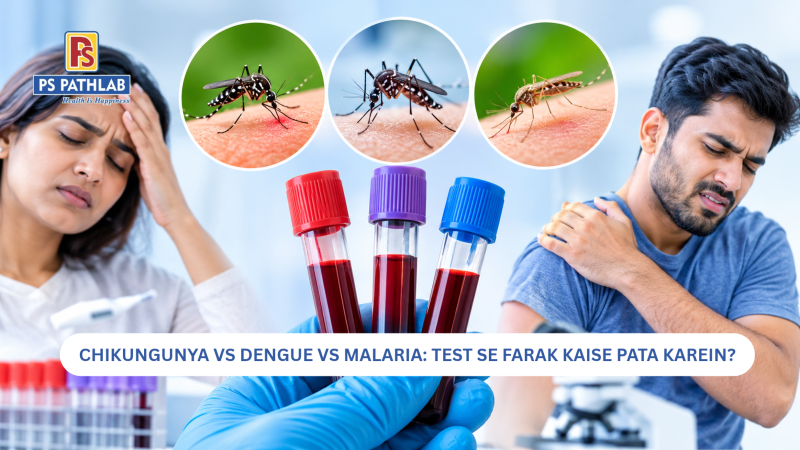
Chikungunya vs. Dengue vs. Malaria: How to Identify the Difference Through Blood Tests?
By PS PathLab | Health Is Happiness
Fever, headache, body pain, and weakness are common symptoms that many people experience during seasonal infections. But did you know that these symptoms could indicate dengue, chikungunya, or malaria?
These three mosquito-borne diseases can have similar symptoms, making it difficult to identify the exact infection without proper medical testing.
So, how can you differentiate between dengue, chikungunya, and malaria? Let's understand their symptoms, diagnostic tests, and when you should get tested.
What Is the Difference Between Dengue, Chikungunya, and Malaria?
Although all three infections spread through mosquito bites, their causes are different.
- Dengue: Caused by the Dengue virus and transmitted by infected Aedes mosquitoes.
- Chikungunya: Caused by the Chikungunya virus and transmitted by infected Aedes mosquitoes.
- Malaria: Caused by Plasmodium parasites and transmitted by infected female Anopheles mosquitoes.
1. Dengue: Symptoms and Blood Tests
Dengue is a viral infection that may cause sudden high fever, severe headache, pain behind the eyes, muscle pain, and skin rashes.
Important Dengue Tests:
- Dengue NS1 Antigen Test
- Dengue IgM Antibody Test
- Dengue IgG Antibody Test
- Complete Blood Count (CBC)
The NS1 test is generally useful during the early stage of infection, while IgM antibodies usually become detectable later.
CBC helps monitor platelet count and other blood parameters but cannot independently confirm dengue.
2. Chikungunya: Symptoms and Blood Tests
Chikungunya is another mosquito-borne viral infection. One of its most noticeable symptoms is severe joint pain, which may sometimes continue for weeks or months.
Common Symptoms:
- Sudden high fever
- Severe joint pain
- Joint swelling
- Muscle pain
- Headache
- Skin rash
- Fatigue
Important Chikungunya Tests:
- Chikungunya IgM Antibody Test
- Chikungunya RT-PCR Test
RT-PCR is useful during the early stage of infection, while IgM testing is generally useful after antibodies develop.
3. Malaria: Symptoms and Blood Tests
Malaria is caused by Plasmodium parasites and can produce recurring fever episodes, chills, and sweating.
Common Symptoms:
- Fever with chills
- Excessive sweating
- Headache
- Muscle pain
- Nausea and vomiting
- Weakness
Important Malaria Tests:
- Peripheral Blood Smear (MP Test)
- Malaria Antigen Test
These tests help detect malaria parasites or their specific antigens in the blood.
Dengue vs. Chikungunya vs. Malaria: Comparison
FeatureDengueChikungunyaMalaria
Cause | Virus | Virus | Parasite
Fever | High fever | High fever | Fever with chills
Joint Pain | Common | Often severe | Can occur
Skin Rash | Can occur | Can occur | Less typical
Main Test | NS1, IgM | IgM, RT-PCR | MP Smear, Antigen
Remember that symptoms can overlap, so laboratory testing and medical evaluation are important.
When Should You Get a Blood Test?
If you experience persistent fever, severe body pain, chills, weakness, or unusual symptoms, consult a doctor.
The timing of testing matters:
- Early fever: Dengue NS1 and malaria testing may be recommended.
- First week: Chikungunya RT-PCR may be useful.
- Around day 4–5 onward: Dengue IgM may become detectable.
- Later stage: Chikungunya IgM may help identify infection.
The appropriate test depends on the duration of fever and your doctor's clinical assessment.
Where Can You Get Blood Tests in Delhi?
Getting timely diagnostic testing can help identify infections and support appropriate medical treatment.
PS PathLab provides diagnostic laboratory services with convenient blood test booking and free home sample collection.
Our services include:
- CBC Test
- Dengue NS1 Test
- Dengue IgM & IgG Test
- Malaria Parasite Test
- Other diagnostic blood tests
PS PathLab – Health Is Happiness!
📍 Address: 198 Deepali Enclave, Pitampura, Delhi – 110034
📞 Contact: +91 96674 92046
🌐 Website: https://www.pspathlab.com/